

Preservé: Minimal Scar Breast Augmentation
By Mr Paul Banwell, BSc (Hons), MB BS, FRCS, FRCS (Plast)
If you are considering breast augmentation, the scar is often what worries you most. You may have read that a standard inframammary incision measures 4 to 5 cm, and you may have seen how that scar behaves at six months, at a year, at two years. The question you are really asking is whether it is possible to have a shapelier, fuller breast without a visible reminder of the surgery. In practice at Pantheons Clinic in East Grinstead, that question sits at the heart of every consultation, and the answer, for a growing number of women, is yes: a genuinely minimal scar approach is now achievable, provided the implant, the pocket and the technique are matched to your anatomy.
This pillar guide walks you through what minimal scar breast augmentation means in a UK context, how the Motiva Preserve and Mia Femtech systems differ from conventional augmentation, who is a candidate, and what recovery looks like when the surgical footprint is reduced.
What Minimal Scar Breast Augmentation Means
Minimal scar breast augmentation is a philosophy as much as a technique. It combines a shorter incision (typically 2.5 to 3 cm rather than the traditional 4 to 5 cm), a tissue-preserving dissection that avoids unnecessary muscle release, and an implant designed to pass through a smaller opening without deformation. When those three elements come together, the scar you are left with is shorter, thinner, and better positioned to hide inside the inframammary fold.
The term is used loosely in UK marketing, so it is worth being precise about what you should expect:
- Incision length under 3 cm, ideally 2.5 cm, placed in the natural crease beneath the breast.
- A defined pocket, meaning your surgeon has planned the implant's resting position rather than allowing it to settle unpredictably.
- Reduced trauma to surrounding tissue, including preservation of the pectoralis fascia where possible and avoidance of full sub-muscular release when the anatomy allows.
- An implant profile matched to your soft tissue envelope, so the shape is driven by your existing framework rather than the implant alone.
The distinction matters because a short scar delivered by rough handling of the tissue does not heal well. A longer, meticulously closed scar can sometimes look better at twelve months than a shorter, hurried one. At Pantheons, scar maturation is discussed openly at every consultation, because the biology of wound healing does not bend to marketing language. Collagen remodelling takes 12 to 18 months, and your final scar quality is the product of surgical technique, your own healing biology, and the aftercare you commit to.
Motiva Preservé Technique Explained
Motiva Preservé is a surgical protocol developed around the Motiva Ergonomix and Round implant families. It has three defining features that make it well suited to a minimal scar approach.
The implant itself
Motiva Ergonomix implants use a proprietary gel (ProgressiveGel Ultima) that behaves differently from conventional cohesive silicone. It holds shape when you are upright but redistributes naturally when you lie down, giving a more anatomical drape without a fixed shaped implant. Because the gel is deformable, the implant can be introduced through a smaller incision using a specialised delivery sleeve (the Motiva Insertion Sleeve), which reduces contact between the implant surface and skin flora during insertion.
The pocket and plane
Motiva Preserve favours a sub-fascial or dual-plane approach rather than full sub-muscular placement in appropriate candidates. Preserving the pectoralis muscle attachments where possible reduces post-operative pain, shortens recovery, and avoids the animation deformity (visible implant movement when you contract your chest) that can follow full sub-muscular augmentation.
The no-touch protocol
The insertion sleeve, combined with meticulous pocket irrigation and a strict no-touch principle, is designed to lower the bacterial load introduced at the time of surgery. Bacterial contamination is one of the recognised drivers of capsular contracture over the long term, so this matters well beyond the first few weeks.
For UK patients, Motiva Preserve typically means an incision in the range of {{INCISION_LENGTH_RANGE}}, a return to light desk-based work within {{RETURN_TO_WORK_DAYS}}, and a follow-up schedule that tracks scar maturation at six weeks, three months, six months and twelve months.
"{{SURGEON_QUOTE_TECHNIQUE}}" — Mr Paul Banwell, FRCS (Plast)
Mia Femtech at Pantheons
Mia Femtech sits alongside Motiva Preserve but is a distinctly different proposition, and one that is often misunderstood. Mia is not a traditional breast augmentation. Motiva positions it as a reduced-footprint breast enhancement, delivered under local anaesthesia with sedation, using a small incision (typically 2.4 cm) and a set of fixed-volume implants (105 cc, 165 cc and 220 cc).
Mia is designed for a specific patient: someone who wants a subtle enhancement rather than a full cup-size increase, who values a rapid return to normal activity, and whose existing breast tissue is adequate to camouflage a smaller implant.
At Pantheons Clinic we run one of the UK's higher-volume Mia Femtech programmes, with {{MIA_CASE_VOLUME}} procedures performed since introducing the technique. The Mia pathway differs from conventional augmentation in three important ways:
- Anaesthesia: local with sedation, not general.
- Recovery: most desk-based patients are back to work within 2-3 days and ready for light exercise within a few weeks.
- Reversibility framing: the smaller implants and preserved tissue plane make future revision or removal a less disruptive proposition than after larger augmentation.
Mia will not suit everyone, and part of an honest consultation is telling you when it does not. If you are looking for a two-cup-size uplift, Motiva Preserve with Ergonomix implants is likely to be the more appropriate route.
Who Suits This Approach
Minimal scar breast augmentation is not defined by the incision alone. Your candidacy depends on a set of anatomical and lifestyle factors that are worked through methodically at consultation.
Anatomical considerations
- Soft tissue coverage: you need enough native breast tissue and subcutaneous fat to camouflage the upper edge of the implant. If your pinch test at the upper pole is below approximately 2 cm, sub-muscular placement may still be advisable, which can shift the technique choice.
- Inframammary fold position: a well-defined, symmetrical fold gives the ideal landmark for a hidden inframammary incision. Asymmetries can be addressed, but they change the surgical plan.
- Chest wall width and breast base diameter: these dictate the implant footprint you can accommodate without splaying laterally when you lie down.
- Skin quality and stretch: previous pregnancies, significant weight change, or connective tissue laxity influence how the skin envelope will drape over the implant.
Lifestyle and expectations
- You are looking for a result that is proportionate to your frame rather than a maximally augmented one.
- You value a shorter recovery and a less visible scar over access to a wider implant range.
- You understand that scar outcome is a biological process that unfolds over 12 to 18 months, and you are committed to the aftercare protocol that supports it: silicone taping, sun protection, and graded return to activity.
Who is not an ideal candidate
- Active smokers, who face measurably higher rates of wound-healing complications and poorer scar outcomes.
- Patients with a BMI outside the safe operative range for day-case surgery, which is discussed individually at consultation.
- Those seeking a very large volume increase in a small frame, where the mechanics of a short incision and preserved pocket work against the aesthetic goal.
Recovery and Follow-up
Recovery from a minimal scar augmentation is generally more comfortable than from a conventional sub-muscular procedure, but it is still surgery, and your body will tell you so for the first fortnight.
The first 48 hours
You will go home the same day in most cases, and you should expect chest tightness rather than sharp pain, managed with simple analgesia. A post-operative support bra is worn continuously, and sleeping semi-upright for the first two to three nights helps reduce swelling.
Week one
By day three to five, most desk-based patients feel ready for light work from home, though you should avoid lifting anything above 2 kg and should not drive until you can perform an emergency stop comfortably, which for most patients is around day seven to ten.
Weeks two to six
Swelling settles progressively. You may begin gentle walking from week one and light lower-body exercise from around week three. Upper-body exercise, running and impact activity are typically deferred until week six. You will start silicone scar therapy at around two weeks, once the incision has fully sealed, and continue for a minimum of three months.
Months three to twelve
This is where the biology of scar maturation matters most. Your scar will look pink and firm at three months, will begin to fade and soften from six months, and will approach its final appearance between twelve and eighteen months. You will be reviewed at six weeks, three months, six months and twelve months, with photographic documentation at each visit.
Long-term follow-up
Motiva implants are covered by the Motiva Product Replacement Policy and are registered on the UK Breast and Cosmetic Implant Registry. You will receive your implant identification card at your first post-operative review. An implant review every two years thereafter is recommended, with imaging as clinically indicated.
Consultation and 3D Imaging
The consultation is where the surgical plan is built, and it is worth understanding what to expect so that you can arrive prepared.
Your first appointment at Pantheons includes:
- A structured medical history covering your goals, previous surgery, family history of breast disease, medications and lifestyle factors.
- A clinical examination with measurements of your breast base width, nipple position, inframammary fold and soft tissue thickness.
- A discussion of implant options: Motiva Ergonomix versus Round, Motiva Preserve versus Mia Femtech, sub-fascial versus dual-plane placement.
- A written quotation covering the surgical fee, implant cost, hospital fee, anaesthetic fee and follow-up.
You are entitled to a two-week cooling-off period between consultation and surgery under UK regulatory guidance, and at Pantheons that period is treated as a minimum, not a formality. Breast augmentation is not a decision to make in a single visit.
Read More About Minimal Scar Breast Augmentation at Pantheons
If you would like to explore whether minimal scar breast augmentation is right for you, read more about our breast augmentation service and the Motiva Preserve and Mia Femtech pathways we offer at Pantheons Clinic.
Results vary between patients. All surgical procedures carry risks, and we will discuss these fully at your consultation.
Cosmetic surgery is a serious commitment. Please consider it carefully.
Clinically reviewed by Miss Katia Sindali, MB BS, MSc, FRCS (Plast), EBOPRAS.
Read our Latest Articles

AHA vs BHA: Mr Paul Banwell Featured in Vogue
Mr Paul Banwell, featured in British Vogue, explains the difference between AHAs and BHAs, which acid suits which skin, and how to use them safely.
Read more
Working with the Body, Not Just On It: Dr Paul Banwell in Wellbeing News
Dr Paul Banwell of PANTHEONS featured in Wellbeing News on regenerative surgery, and why the weeks after an operation matter as much as the operation itself.
Read more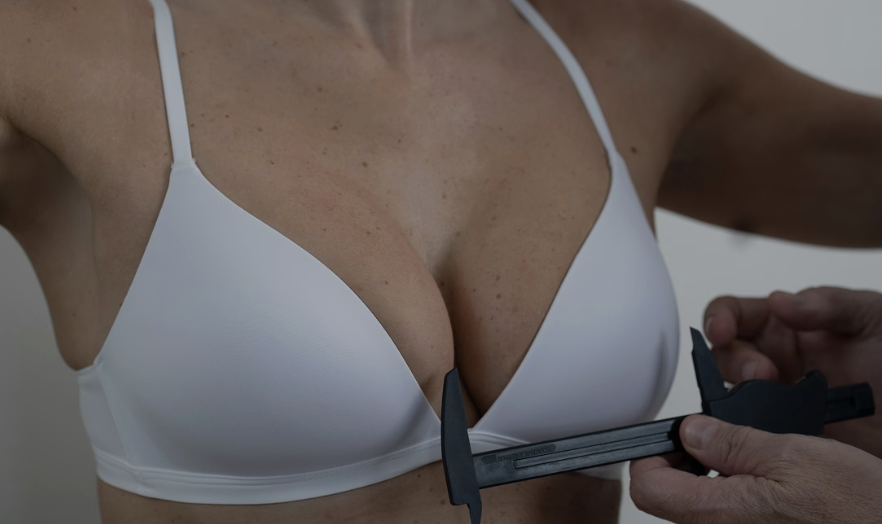
Breast Reduction Recovery: A Timeline
A week-by-week breast reduction recovery guide for patients in. the UK from plastic surgeon Dr. Andreas Shiatis
Read more